
Is Art Weaker When Taboos Collapse?
Was the literature of repression just better?

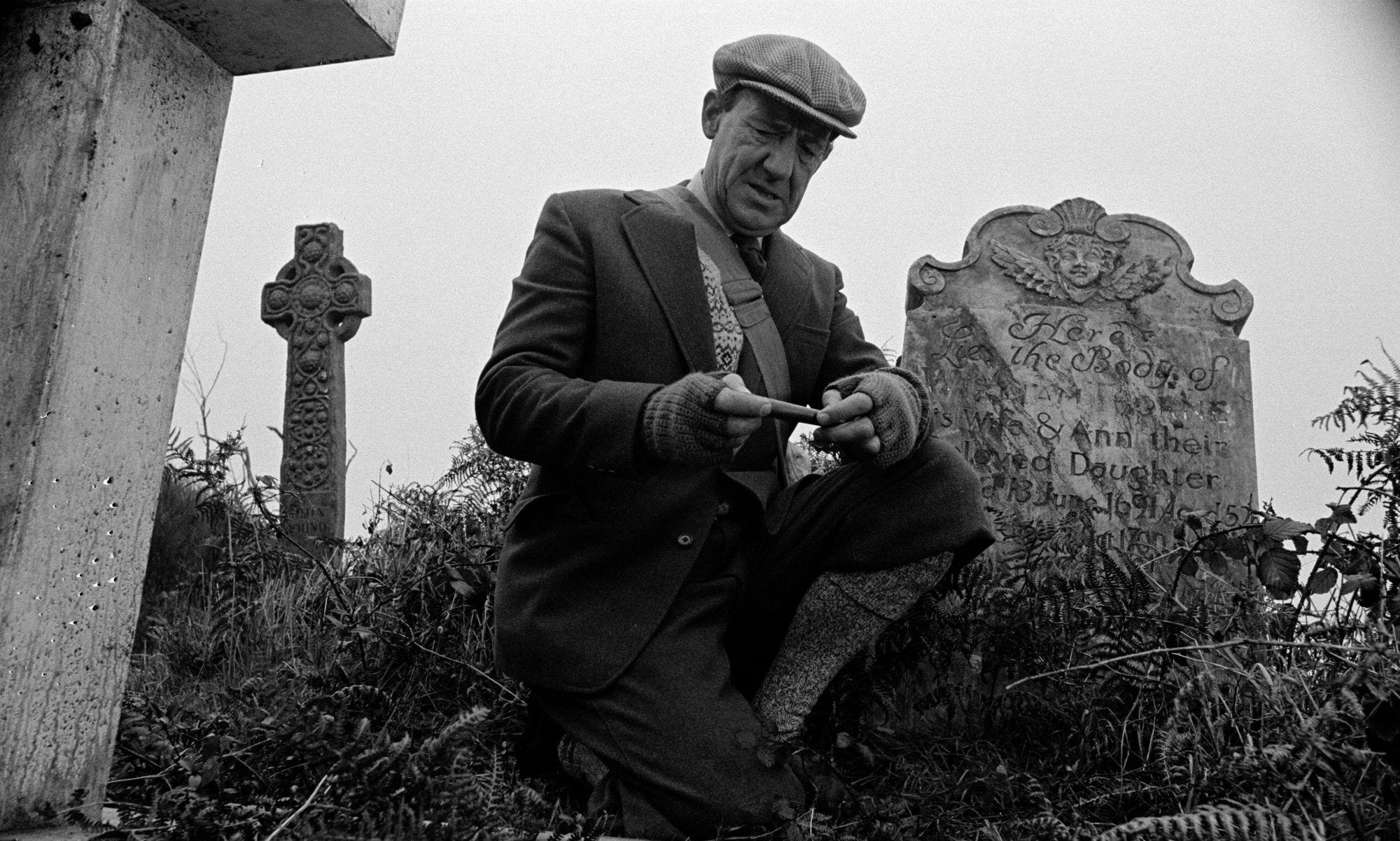
The literary genre that left the most indelible imprint on me was the Victorian and Edwardian ghost story. Dog-eared compilations were reliably found in most thrift stores and libraries in Otahuhu, teeming with boarding school dormitories, seaside hotels in Cornwall, dusty manuscripts in the cloisters of Cambridge. And haunting all these spaces were committed bachelors – dons, vicars, and librarians – mummified in solitude and celibacy. Authors M.R. James (a medievalist scholar – what else?), E.F. Benson (also of Mapp & Lucia fame), Oliver Onions, Saki (H.H. Munro), and, from across the Channel, Guy de Maupassant, were my favourites. I would lock myself away and read these sometimes three-page Swiss watches of irony, and once the jolt arrived, recall bolting from my empty room and into a living room where a blaring Are You Being Served? seemed to do the work of a handy exorcist.
What I could never have known at nine years old is that many of these stories were queer parables, written by men indistinguishable from their miserable protagonists: closeted homosexuals.
I shouldn’t be too hard on myself, because few could have known. We weren’t meant to. This was an era when homosexuality existed not merely underground but under criminal sanction (where it would remain for another six or seven decades). Oscar Wilde’s trial, itself a horror show to watch through your fingers, was still a living memory when James first published his tales. What could not be said directly seeped instead into the atmosphere: the terror of exposure, the uncanny thrill of forces unacknowledged. The risk of daring to, even once. I, and the authors’ contemporaries, consumed mightily chilling tales, while James and Benson were making manifest the guilt and urges that, without a pen to tame them, might have destroyed them.
M.R. James’s “Oh, Whistle, and I’ll Come to You, My Lad”, a personal favourite, tells the story of a fussy academic who spends a holiday on the East Anglian coast, and there discovers an ancient bone whistle. After deciphering the inscription upon it (“Who is this who is coming?”), he foolishly blows upon it and experiences a spectral visitation in the form of dancing sheets. The story is extremely effective, and post-Freud, we can always read a ghost story as purely psychological, but what afflicts our protagonist here is incredibly specific: he put something dirty in his mouth, and now must pay a price for it.
The ghost story could be a parable of queerness in exile. These tales whisper of encounters that must never be spoken, and punishments that feel like the embodiment of internalised shame. The ghastly spectres are less monsters than projections of unconsummated longing. The bachelor is haunting himself.
Benson too, brother of the Archbishop of Canterbury and himself a closeted homosexual, populated his stories with lonely men, smug spinsters, and lurking presences. He was a satirist as well as a fantasist, but his ghosts carry the same undertow: the dread of exposure, the horror of the social gaze. Even the ghosts themselves seem like metaphors for unwanted desire – always at the window, never invited in.
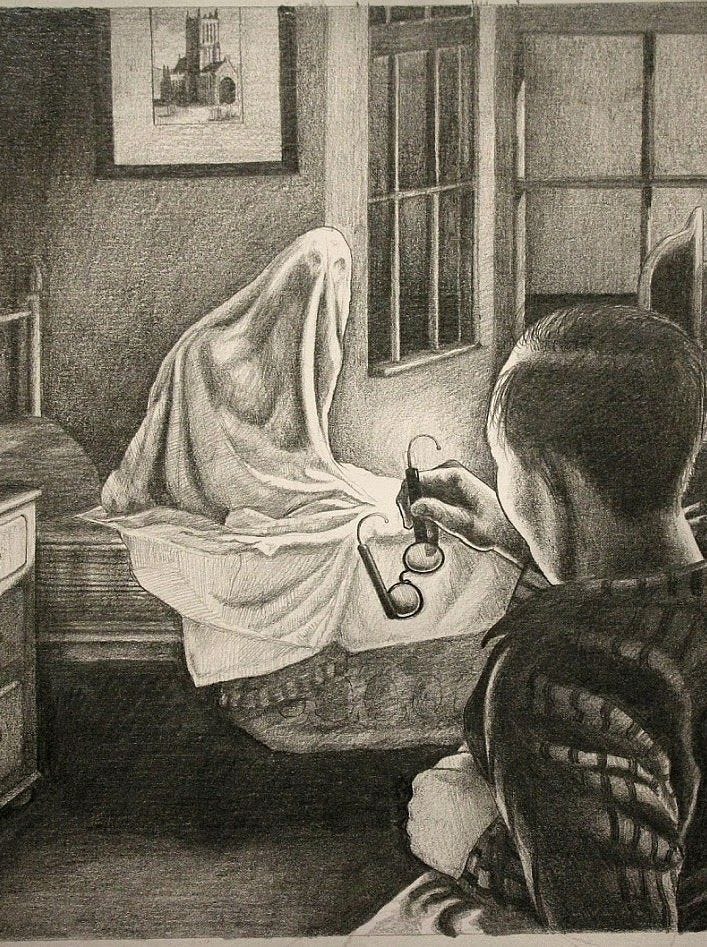
Now for the paragraph where I effuse about how far we’ve come, right? Not so fast. “Oh, Whistle, and I’ll Come to You, My Lad” is a masterwork of the genre. An incredible amount of unease, repression, and atmosphere is packed into this deceptively simple tale. And the phantom, when it arrives, manifests as “a horrible, intensely horrible, face of crumpled linen” rising off the empty bed across the room. Absurd. Ambiguous. Terrifying.
The literature of repression was just better. Which begs the question:
Are poorer standards what we get when taboos collapse?
With the advent of gay bars, parades, and political liberation, something of the mystery was unquestionably lost. Edmund White and Alan Hollinghurst voiced this lament, if in a softer register: that assimilation, while necessary, robs queerness of its outsider charge, its special tang of danger. To be outlawed was also to be romantic. To be permitted is to risk being boring.
Susan Sontag – someone always worth listening to – said that “Camp” was a sensibility born of marginality and coded expression: a world of insiders and outsiders. Its energy depended on concealment, irony, and a sense of the forbidden. She would throw the tribe in alongside the queer as art’s MVPs: “Jews and homosexuals are the outstanding creative minorities in contemporary urban culture. Creative, that is, in the truest sense: they are creators of sensibilities.”
But how could this still be the case when there is nothing left to repress?
James needed the unspeakable to write Oh, Whistle, and I’ll Come to You, My Lad. Benson needed his closet to populate his ghostly parlours. If every desire is gratified, every impulse made ordinary, do the phantoms simply vanish? Is that what gore is? The satiated now reaching for the pornographic?
An answer may rest in the cruel irony of history. The Jews - whose sensibility once shaped the modern imagination - have become outsiders again. Walking a Jamesian coast, alone and exposed, they move like ghosts themselves in this liminal space. Once again forced to mask, to navigate peril with skill, we - at least - may once again create art in which every gesture, every nuance, carries weight; in which allegory is a literal life-saver. Marginality, exile, concealment - they are not just conditions of survival, but the raw materials of a literature that cannot be flattened by safety.
Great commentary. And the sentences "To be outlawed was also to be romantic. To be permitted is to risk being boring" succinctly put.
Having said that, I confess that the underlying 'queer' messages of ye olde ghost stories escaped me - lol!
Oh me too, I love the old Victorian and Edwardian ghost stories and weird tales, have since childhood (I’m currently reading William Hope Hodgson). Have you read this ?Part travelogue, part biographies of UK ghost story writers - https://www.fishpond.co.nz/Books/Ghostland-Parnell-Edward/9780008271992
I like the idea that taboos can fuel creativity but there are so many downsides including not being able to easily make connections and form like minded communities which really matters for collective efforts like music and theatre.